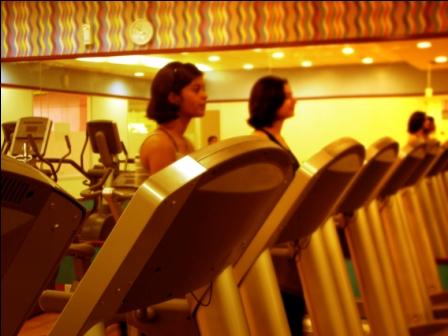
Showing posts with label exercise. Show all posts

Friday, December 2, 2011

Exercise improves sleep apnea in overweight, sedentary adults

Exercise training may be beneficial for the management of sleep apnea in overweight patients who lead a sedentary lifestyle, according to a study in the December issue of the journal SLEEP. Forty-three overweight or obese adults, with at least moderately severe sleep apnea, were selected for the study.

These adults were used to exercising less than two times a week. For the study, they underwent a 12-week session of moderately intense exercise training. The purpose was to see if the exercise would have an effect on previously untreated sleep apnea.

Sleep apnea was improved despite no changes in body weight. However, only about a quarter of study participants saw a 50 percent or more reduction in sleep apnea. But a 20 percent reduction in sleep apnea was experienced by 63 percent of participants. Together, these results led researchers to conclude that exercise training is moderately effective in treating sleep apnea in sedentary, overweight patients.

Continuous positive airway pressure therapy (CPAP) is the first-line treatment for sleep apnea. Visit the Your Sleep website to find out if you are at risk for sleep apnea. Get help for sleep apnea at an AASM-accredited sleep center.

Tuesday, March 29, 2011

Sleep More, Stress Less to Achieve Your Weight Loss Goals

Weight Watchers and Jenny Craig should get with the program. Neither of the weight loss leaders integrates sleep education and sleep diaries. And the companies are making a big mistake, new research suggests. Popular approaches used by groups like Weight Watchers use a diary to keep track of food and exercise. Adding an extra column in the diary for hours slept would be a minor change that could make a significant impact.

A new study in the International Journal of Obesity found that adequate sleep increases your chances of success during weight loss efforts. People trying to lose at least 10 pounds more often reached their goal if they had six to eight hours of sleep per night. Stress reduction also helps with weight loss, the study reports.

A group of 500 study participants were instructed to lose 10 pounds over a six month period. All participants attended weekly weigh-in and educational meetings. Instructors at the meetings encouraged the participants to consume 500 fewer calories per day, adopt a healthy low-fat, low-sugar diet and exercise for at least 180 minutes a week. Participants were required to keep record of how long they slept, stress levels and mood. The class instructors encouraged participants to keep a food diary as well.

Nearly three-quarters of the people who slept more than six hours and kept a low-stress lifestyle were successful in losing 10 pounds or more and were twice as likely to meet their goals compared to those who get six or fewer hours of sleep.

Sleep loss tends to lead to weight gain or undermine dietary weight loss because it changes the body’s hormone levels. Lower leptin and higher ghrelin can lead to a slower metabolism but a bigger appetite for junk food.

Whether you are trying to lose weight or stay trim for swimsuit season, prioritizing sleep is always a good idea. The American Academy of Sleep Medicine recommends adults get at least seven hours of sleep. Don’t underestimate the power of diet and exercise. Weight loss programs like Weight Watchers work for many people because they educate people to make the right choices and encourage them to hold themselves accountable for their health.

Thursday, September 16, 2010

Sweating off Insomnia Works, New Study Contends

The benefit of exercise for insomnia continues to be a hotly debated topic in the sleep research community. Recently, several high-profile reports have come to conflicting conclusions on whether a workout routine can promote sleep.

The latest published study by Northwestern University researchers shifts the argument back in favor of exercise for insomnia. The article concludes that older adults can counteract the sleeplessness associated with aging by taking up an aerobic workout routine.

Many of the adults who started exercising during the study improved from poor sleepers to good sleepers. The group reported reduced depression and overall improved mood along with enhanced of sleep quality.

The study involved 23 mainly sedentary adults of average age of 55. The group was randomly assigned to either aerobic conditioning or a non-physical activity such as a cooking class or museum lecture. Only the exercise group saw improved sleep.

A June study in the Journal of Clinical Sleep Medicine came to a similar conclusion for slightly younger insomnia patients. A 50-minute jog on the treadmill 4-8 hours before bedtime helped middle-aged insomniacs sleep sooner. Moderate aerobic exercise was more effective in promoting sleep than high-intensity cardiac routines or resistance training. The authors believe the routine helps with bedtime anxiety.

Another study published in May claims the benefits are all mental. Swiss researchers found people who rated themselves as physically fit slept better, even if they were not necessarily in good physical shape.

Normal adults with no history of insomnia may not see any benefit at all, a 2003 study concluded. Wrist actigraphy demonstrated active young adults fell asleep only a minute and a half faster than their peers.

In some cases exercising can actually hurt sleep. Never exercise within a few hours of bedtime. Evening workouts run counter to the evening wind-down process and can actually make you wake up.
There’s one thing all sleep experts can agree on: exercise is important for your overall health. While insomnia may or may not improve, you’re reducing your risk of getting obstructive sleep apnea by controlling your weight and taking care of your body.

Tuesday, June 15, 2010

Moderate aerobic exercise can improve sleep quality for insomnia patients


A modest jog or a few dozen laps in the pool may help insomnia patients rediscover restful sleep. A new study published in the June issue of the Journal of Clinical Sleep Medicine demonstrates how moderate-intensity cardio exercise can improve overall sleep quality.

Exercising 4-8 hours before bedtime helped primary insomnia patients get to sleep faster, wake up less often and increase total time asleep. The authors think the aerobic exercise helps reduce bedtime anxiety.

High intensity aerobic exercise and resistance training led to fewer improvements.

The findings were based on overnight sleep study results along with a daily sleep log.

The study featured a sample of 48 subjects assigned to a control group or one of the three exercise conditions. The participants, ages 30 to 55, all had chronic primary insomnia. Anyone with a medical or psychiatric condition was excluded. People who exercised regularly or worked abnormal shifts were also left out of the study.

The moderate-intensity aerobic exercise group ran at a medium pace on a treadmill for 50 minutes. The high-intensity group ran faster for three ten-minute sessions, each followed by ten minute rest periods. Both groups began with a three minute warm-up session.

Participants assigned to resistance training worked out for 50 minutes. They did nine exercises targeted at different muscle groups. Each involved three sets of 10 repetitions.

Past studies have suggested the insomnia-reducing effects are all mental. Sleep experts regularly recommend exercise to help reduce obstructive sleep apnea.

Wednesday, May 26, 2010

Sleep and exercise: is the benefit all mental?


The popular belief is getting regular physical exercise will make sleeping easier and more restful. A vocal group of sleep researchers are questioning the legitimacy of this conventional wisdom.

The New York Times recently published an article summarizing provocative recent research on the benefits of exercise.

A Swiss study suggests the benefit is all mental. People sleep better because they believe they’re improving their sleep through exercise.

The authors were unable to make any direct correlation between sleep and amount of physical exercise. College students in the study who rated themselves low on a perceived fitness scale tended to report problems sleeping. Those who rated high on the same scale reported sound sleep. The correlation between how much they exercised and how perceived fitness was not very high.

A past study had difficulties linking regular exercise with quality of sleep. Researchers were unable to find any pattern in sleep and exercise habits based on diaries completed by U.S. college students. The same study also reported active adults fell asleep only a minute and a half faster than their inactive peers. The data was taken from monitors that recorded their movements and sleeping patterns.

Further research suggests increasing exercise may increase slow wave sleep, however this effect was did not hold true for marathon runners and frequent exercisers. Body temperature may play a part in the relationship between exercise and deep sleep.

While it is debatable on how exercise impacts normal sleep, there are preventative benefits. Physical fitness reduces the risk for the development of obstructive sleep apnea, a sleep disorder often tied to obesity.

Weight loss through dieting and regular exercise is part of a treatment strategy recommended by the AASM for people who are obese and have sleep apnea. Research suggests weight loss provides relief by reducing the severity of sleep apnea. This treatment should be combined with CPAP or an oral appliance to improve the quality of sleep and reduce the risk of serious complications.

Sunday, January 17, 2010

Sleep, Exercise & Weight Gain

According to Reuters News, the results of a small study make a common-sense claim: Lack of sleep leads to lack of exercise, which leads to weight gain.

Several studies have found that people who are not sleeping enough tend to gain weight. But a connection was never explained fully.

Last year, the Sleep Education Blog
reported that sleep deprivation causes changes in hormones that regulate your appetite. This could eventually lead to weight gain.

The results of this study may point to a simpler explanation.

The
study took place in Germany. It involved 15 healthy men who were of normal weight. Participants were observed for four nights in a sleep lab. On two of the nights, the men slept for eight hours. For the other two, they were only allowed to sleep for four hours. During the following days, the men wore wrist devices to track their movement.

On the days following sleep deprivation, the participants’ activity levels fell. After getting eight hours of sleep, the men spent 25 percent of their time awake doing high-intensity exercise. After four hours of sleep, the amount of time spent doing these activities fell to 22 percent.

The men did not report feeling more hungry, and they did not eat more after the nights of sleep deprivation. No changes in blood levels or appetite-regulating hormones were found.

The authors of the study note that their findings do not eliminate a potential link between hunger, appetite-regulating hormones and chronic sleep deprivation. But they do indicate that even a small amount of sleep loss can reduce physical activity. Over time, if you don’t exercise you might begin to put on weight.

Visit Sleep Education.com to learn more about the link between
sleep and weight.

Image by mikebaird

Thursday, October 15, 2009

Sleep Apnea in Women: Diet, Exercise & Weight Loss

A new study from Australia tested the effectiveness of a 16-week exercise and diet program for people with obstructive sleep apnea. The results were published today in the Journal of Clinical Sleep Medicine.

The
study involved 12 people with an average age of 42 years; nine of the participants were women. They had an average body mass index of 36.1; a BMI of 30 or higher is considered “obese.”

They also had an average apnea-hypopnea index of 24.6 breathing pauses per hour of sleep; an AHI of 15 to 30 is considered “moderate” sleep apnea.

The program used
Optifast, a very low-energy diet. Participants also followed a supervised exercise schedule; this included both aerobic and resistance training.

Results show that participants lost an average of about 27 pounds. Some typical OSA symptoms also improved; these included
snoring, daytime sleepiness and mood.

But weight loss did not cure OSA. It did reduce the average AHI by 25 percent; but participants still had moderate sleep apnea with an average AHI of 18.3

“Although there was some improvement in sleep disordered breathing, it was not seen in all patients and was not proportional to the degree of weight loss,” lead author Dr. Maree Barnes told the AASM.

Follow-up at 12 months showed that all but one person who completed the program had regained some weight. But half of the participants were able to maintain weight loss of at least seven percent.

The AASM
recommends dietary weight loss as one treatment strategy for people who are obese and have sleep apnea. But weight loss should be combined with another treatment such as CPAP or an oral appliance.

Read more about
weight loss and sleep apnea. Learn more about women and sleep apnea risk.

You should talk to your doctor to develop a healthy weight-loss plan that is right for you. For help with sleep apnea you should contact an
AASM-accredited sleep disorders center in your area.

Monday, August 31, 2009

Student Athletes Sleep Better than their Inactive Peers

A new study in the Journal of Adolescent Health found that teenagers who routinely exercise vigorously have higher quality sleep than their peers.

Overall, athletes scored higher in sleep quality and mood and woke fewer times after falling asleep. They also had better daytime concentration and less fatigue. Athletes also scored lower for anxiety and depressive symptoms.

The study, conducted in Switzerland, included 434 adolescents with an average age of 17. Of the total participants, 258 took part in Swiss Olympic classes, which provide intense levels of training for high school students. They averaged about 18 hours of exercise per week. The other participants, recruited from Swiss high schools, averaged about five hours of exercise per week.

Students kept a log for seven days, tracking how much they exercised, how much sleep they got, the quality of that sleep, how tired they felt during the day, how well they were able to concentrate, and how tired they were at bedtime.

Findings suggest that consistent exercising is positively related to adolescents' sleep and psychological functioning. Results also indicate that males with low exercise levels are at risk for increased sleep complaints and poorer psychological functioning.

In July the Sleep Education Blog reported on a smaller study; it also found that regular exercise can lead to multiple improvements in the sleep of teens.

Friday, July 31, 2009

Physical Activity & Improved Sleep in Children

Do children really sleep better if they’ve been more active during the day? A new study from New Zealand may confirm what parents have long suspected.

The
study involved 519 children who were 7 years old. Their activity was measured for 24 hours by an actigraph that they wore on their waist.

Results show that children who were more active during the day fell asleep faster at night. As their mean daytime “activity count” increased, their time to fall asleep decreased.

Overall, the children took 26 minutes to fall asleep on average. Each hour of daytime inactivity increased the time it took children to fall asleep by 3.1 minutes.

Children who fell asleep faster also slept longer,
reports the BMJ Group. Every 11-minute drop in the time it took to fall asleep was associated with an extra hour of total sleep time.

In the journal Sleep in 2008, the same research team published an early analysis of the same sample of 7-year-old children. The
study found that their average sleep time was about 10 hours.

Their average bedtime was 8:15 p.m.; their average rise time was 7:07 a.m. Children who went to bed after 9 p.m. slept about 41 minutes less than other children.

On weekend nights the children slept about 27 minutes less than on school nights; although they went to bed about 30 minutes later on weekends, their morning rise time was only slightly later.

There also was a seasonal effect, with children getting the least sleep in summer. They slept about 40 minutes longer in winter, 30 minutes longer in fall and 15 minutes longer in spring.

The study also found that children who slept less than nine hours at night were three times more likely to be
overweight or obese. The increased risk remained even after controlling for factors such as TV watching and sedentary activity.

The AASM recommends that school-aged children get about 10 to 11 hours of sleep each night. Learn more about
sleep and children on SleepEducation.com.

Image by Elke Noda

Wednesday, July 22, 2009

Regular Exercise & Teen Sleep

A new study suggests that regular exercise can lead to multiple improvements in the sleep of teens.

The study involved 12 teen athletes who got about 14 hours of vigorous exercise per week. They were compared with 12 controls who exercised for only 1.5 hours per week. Their sleep was evaluated following a day without exercise.

Results show that the athletes took less time to fall asleep. They also woke up fewer times during the night.

Overall their sleep was more efficient; a higher percentage of their time in bed was spent sleeping. The athletes also spent more time in the stage of deep, slow-wave sleep.

Their also was less variation between the weeknight and weekend sleep of teen athletes. Often teens sleep longer on weekends to make up for
sleep loss during the week.

Sleeping better at night also had a daytime effect; the athletes reported better daily performance.

Is your teen getting enough sleep? Check out the
signs your teen needs sleep on SleepEducation.com.

Image by Alpharetta CVB

Thursday, May 21, 2009

Losing Weight with CPAP for Sleep Apnea

Excess body weight is a major risk factor for obstructive sleep apnea. Treating sleep apnea with CPAP helps some people bring their weight under control.

In some cases the change is dramatic. NorthWest Cable News in Seattle
reports that CPAP helped one woman lose more than 100 pounds in a little more than a year. She used to weigh more than 300 pounds.

Then she was diagnosed with sleep apnea and started using CPAP. She began to notice that she had more energy. So she started working out regularly and eating better.

CPAP also played a role
behind the scenes of the TV show “The Biggest Loser: Couples.” Each contestant was evaluated during an overnight sleep study.

Sixteen of the 22 contestants were diagnosed with sleep apnea. Sponsor Philips Respironics
provided treatment for each of them.

But a
2008 study shows that there is no guarantee that CPAP will lead to weight loss. The study was published in the Journal of Clinical Sleep Medicine.

The study involved 228 adults with sleep apnea. They had an average age of 55 years.

Results show that using CPAP for one year did not produce a significant drop in
body mass index (BMI). Some participants initially lost weight after starting CPAP. But they gained the weight back during the year.

The authors conclude that CPAP alone is unlikely to produce weight loss; CPAP users still need to take an active role in losing weight.

Using CPAP is likely to increase your daytime alertness and energy level. This can help you lose weight if you become more active and get more exercise.

You should talk to your doctor to develop a healthy weight-loss plan that is right for you.

Learn more about the
benefits of CPAP on SleepEducation.com.

Image by Chris

Monday, May 11, 2009

Can You Treat Sleep Apnea with Tongue and Throat Exercises?

Obstructive sleep apnea involves pauses in breathing during sleep. These breathing pauses occur when the tongue and soft tissue of the throat collapse and block the airway.

What if you exercised the tongue and the throat muscles each day? Would strengthening and toning these muscles prevent your airway from collapsing?

This idea gained support from
a small study in 2006. Sleep apnea severity improved in people who learned to play the didgeridoo.

A
new study from Brazil used an exercise regimen to put this theory to the test. The small study involved people with moderate sleep apnea; 16 participants performed daily exercises for three months.

The British Medical Journal Group
reports that the exercises were developed from speech therapy. One technique was to repeatedly press the tongue up against the roof of the mouth. Participants also practiced sucking in the cheeks. Another technique was to repeatedly blow up a balloon after breathing in through the nose.

Results show that sleep apnea symptoms improved after performing the exercises each day for three months. Snoring intensity and frequency decreased. Daytime sleepiness and sleep quality improved. Neck circumference even decreased by about 1 cm.

Sleep apnea severity also improved; the average number of breathing pauses dropped from 22.4 pauses per hour to 13.7 pauses per hour.

"These data suggest that the exercises were able to promote remodeling of the upper airways," study author Dr. Geraldo Lorenzi-Filho said in a prepared
statement. “This indicates to us that these exercises have significant potential to improve symptoms in sufferers of OSA.”

It is important to note that the treatment was not tested on people with severe sleep apnea. And 14 of 16 participants still had mild or moderate sleep apnea at the end of the study.

Lorenzi-Filho noted that it is unclear if all of the exercises were essential. One of the techniques may have been more effective than the others.


The most effective treatments for sleep apnea are CPAP and oral appliances. A sleep specialist at an AASM-accredited sleep center can determine which treatment option is best for you.

Tuesday, January 27, 2009

Sleep Apnea: The Leg Link

A new study finds an intriguing link between obstructive sleep apnea and your legs. That’s right, your legs.

The study reports that sitting for long periods of the day causes fluid to accumulate in your legs. When you lie down in bed at night, the fluid then shifts from the legs to the neck. The excess fluid in the neck reduces the size of the upper airway. This makes it easier for soft tissue in the neck to collapse and block the airway.

The study involved 23 healthy men who were suspected of having sleep apnea. None of the men were obese. Researchers measured the changes in their leg fluid volume and neck size from the beginning to the end of the night. They also recorded how much time the participants spent sitting during the previous day.

Results show that overnight changes in leg fluid volume and neck size are independently linked to the severity of sleep apnea. The study provides one explanation for why some people may have sleep apnea even though they are not obese.

The results also provide extra motivation for people with sleep apnea to get more exercise. Get up from your desk and get your legs moving to prevent fluid buildup.